
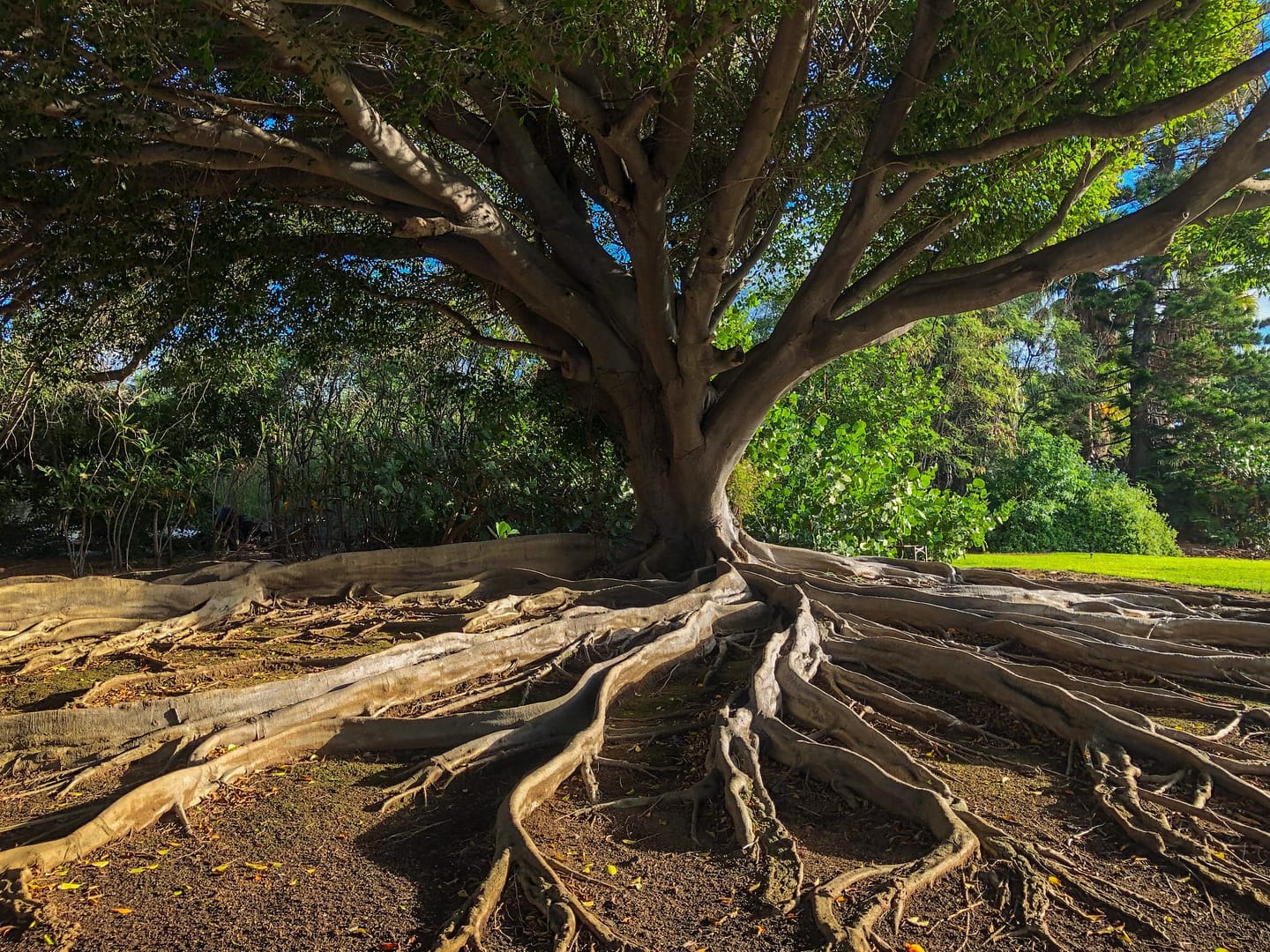
If you have a large tree close to your home and you are seeing cracks or a floor that has dropped on that side, you may be wondering whether the tree is to blame. In Houston it can be, but usually not the way people picture it. It is rarely roots pushing against your slab and cracking it. Far more often it is the tree pulling moisture out of the clay during a drought, so that side of the soil shrinks and your foundation settles with it.
That distinction matters, because it changes what you should do about it, and cutting the tree down is not always the right answer.
How a tree actually affects your foundation
A big, thirsty tree can draw a surprising amount of water out of the ground every day in the heat of summer. During a Houston drought, a tree close to your home dries out the clay on that side faster than the rest of the yard. The clay shrinks, loses volume, and your foundation drops with it.
It is the same uneven-moisture problem behind most foundation movement here. Instead of a downspout keeping one corner wet, you have a tree keeping one side dry. Either way, one part of your home ends up supported differently from the rest, and that is what opens cracks and racks doors out of square. The tell is that the movement is usually worst in a drought and on the side nearest the tree.
Which trees, and how close
The bigger and thirstier the tree, and the closer it sits to the house, the more it matters. Many of the trees Houston homeowners love are also heavy drinkers, live oaks, water oaks, willows, elms, and sycamores among them. A large one of these near the slab has more effect than a small ornamental well out in the yard.
As a rough guide, a mature tree within about its own height, or its own canopy width, of the house is close enough to pay attention to during dry seasons. That is not a rule that a tree at that distance will cause damage, only that it is worth watching and worth mentioning to an inspector.
How far a tree's roots really reach
People picture roots as a mirror image of the branches, diving straight down under the trunk. In reality, most of a tree’s feeder roots, the fine ones that actually take up water, spread out sideways in the top few feet of soil, and they can reach well past the edge of the canopy. That is why a tree does not have to be right against the house to affect it. Its roots may already be drawing moisture from the soil under one side of your slab.
It also explains why the drying is worst in a drought. In normal weather there is enough moisture in the ground for both the tree and the soil under your home. In a long dry stretch, the tree keeps pulling what water is left, and the clay on that side shrinks harder than it would have on its own. The roots are not damaging anything directly; they are just winning the competition for water, and your foundation settles into the space the shrinking clay leaves behind.
How to tell if the tree is really the cause
Before you decide the tree is the problem, look at the pattern. A tree is a more likely factor when the settlement is on the side of the home nearest the tree, when it gets noticeably worse during droughts and eases after heavy rain, and when there is no obvious drainage problem doing the same thing. If the movement is on the opposite side of the house from your big tree, something else is probably driving it.
This is exactly the kind of thing an inspection sorts out, by reading the floor elevations, the drainage, and the trees together rather than blaming the nearest large trunk.
What to do before you cut anything
Removing a large, healthy tree is not always the answer, and it can even make things worse. When a mature tree that has been drinking from the soil for decades is suddenly gone, the clay on that side can slowly take on more moisture than it used to and swell back up, lifting that part of the foundation. That rebound heave can cause its own damage. So the chainsaw is rarely the first move.
There are usually better first steps:
- A root barrier. A barrier installed in a trench between the tree and your home redirects roots down and away, keeping the drying effect away from the foundation while letting you keep the tree. This is often the best first option.
- Watering during droughts. Keeping the soil on the tree side from drying out sharply, with a soaker hose run slowly during long dry spells, keeps the moisture steadier so the ground does not shrink hard on that side. The goal is even moisture, not flooding the yard.
- Supporting what has already moved. Where that side of your home has already settled, the settlement itself is corrected by supporting the affected area on piers. Managing the tree keeps it from happening again.
An inspection can tell you whether the tree is actually a factor before you make a decision you cannot undo. Taking out a healthy, decades-old shade tree is a big and permanent step, and it is worth being sure first.
Should you ever remove the tree
Sometimes, yes. If a tree is diseased, dying, or genuinely too close and clearly driving movement, removal may be part of the plan. But it should be a considered decision, ideally with an inspector’s read on the foundation and, for a valued tree, an arborist’s input, not a reflex the first time you see a crack. And if a large tree is removed, it is worth watching that side of the home afterward for the slow rebound that can follow.
What a good inspection looks at
A good inspection does not just look at the tree. It takes floor-elevation readings across your home, checks the drainage and grading, notes the trees and how close they sit, and reads how the cracks and doors line up with all of it. The point is to understand the movement pattern and confirm what is actually driving it before anyone recommends removing a tree, installing a barrier, or setting a pier.
If your home turns out not to need repair, you should be told that. Sometimes the right answer is a root barrier and better watering, and time, rather than structural work.
What to do next
If you have a large tree near your home and you are seeing cracks or a floor that has dropped on that side, schedule a free inspection with AAA Foundation Service. We have worked on Houston foundations since 1955. We will look at the tree, the drainage, and the movement pattern together and tell you what is actually going on before anything comes down.
Frequently asked questions
Should I cut down a tree near my foundation?
Not automatically. Removing a large established tree can cause the soil to rebound and lift your foundation, creating a new problem. Get an inspection first to confirm the tree is actually contributing before you remove it.
Do root barriers work?
They can help by keeping roots, and their drying effect, away from the foundation while you keep the tree. On many homes a root barrier is a better first step than removal.
How close is too close for a big tree?
As a rough guide, a mature tree within about its own height or canopy width of the house is worth watching during droughts. Distance alone does not decide it; an inspection reads whether that particular tree is affecting your home.
My foundation dropped near a big tree. What now?
Have it inspected. If that area has settled, it may need support, along with managing the moisture the tree is pulling from the soil so it does not settle again.
Can removing a tree damage my foundation?
It can. When a thirsty tree is removed, the soil on that side can slowly take on more water and swell, lifting the foundation. That is why removal should be a considered decision, and why that side is worth watching afterward.
Free foundation inspection
We will tell you what is moving, why, and whether it needs repair. No obligation.

AAA Foundation Service
AAA Foundation Service has repaired Houston foundations since 1955. We inspect the full movement pattern, explain what we find, and recommend repair only when it is needed.
Seeing cracks or sticking doors?
If a tree near your home has you concerned about your foundation, schedule a free inspection with AAA Foundation Service before you make any big decisions.



0% Financing for 18 Months
